Situation
I lead product strategy across a multi-application licensing platform inside a highly regulated environment. The work spans several product managers, engineering, operations, design, and executive stakeholders. Ambiguity was expensive: requirements took months, implementation intent drifted, and partners lacked a shared picture of what “done” meant.
Constraint
This is public-sector adjacent work. I cannot show internal systems, named agencies, or screenshots. What I can show is the operating system that made delivery faster without lowering the quality bar.
Decision
I treated product requirements as a specification problem, not a document-volume problem.
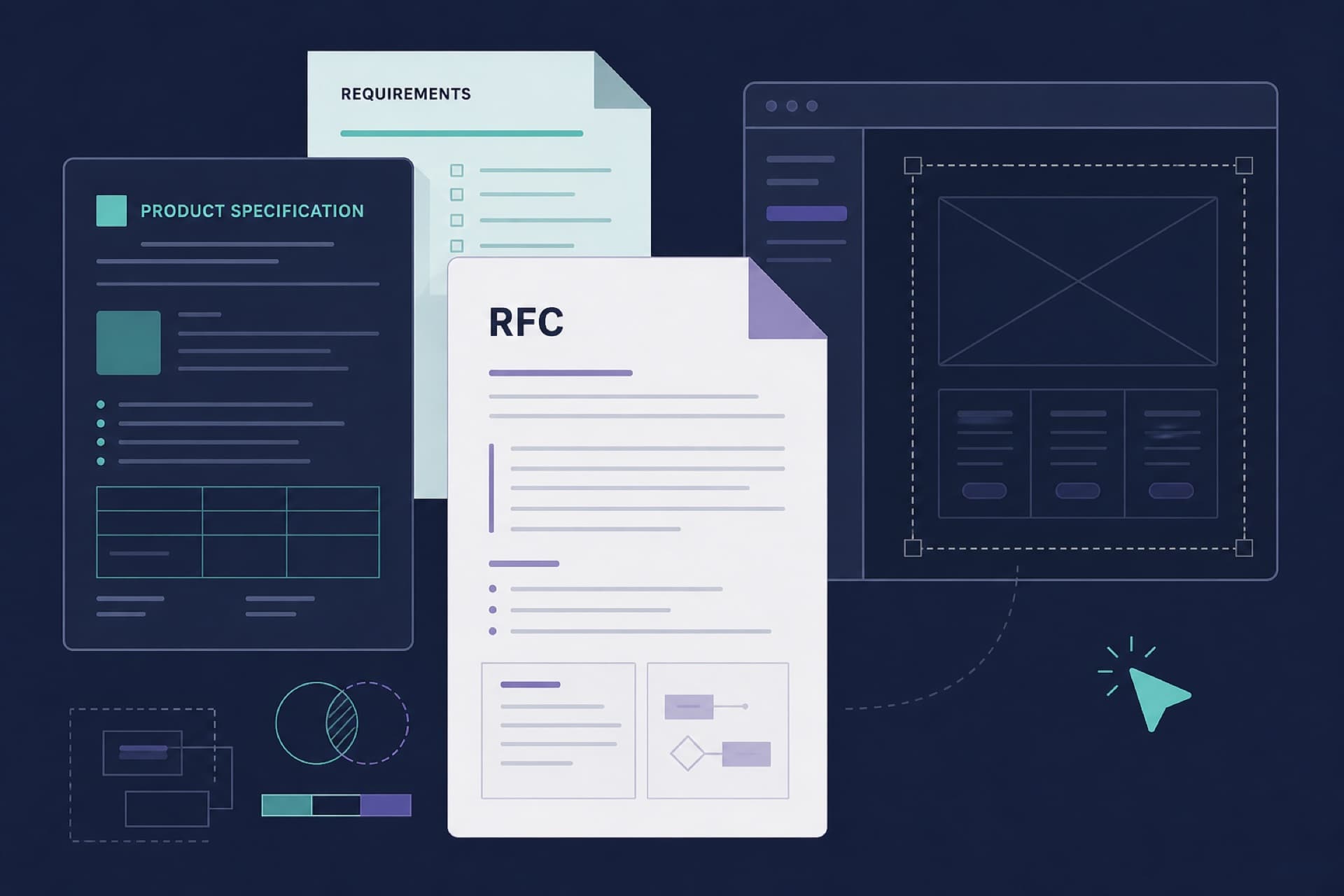
- RFC-based collaboration. Replaced reactive roadmaps with written proposals that engineering, operations, and product could argue with in the open. Ambiguity had a place to go instead of hiding in slide decks.
- Prototype before scale. Used Figma and Replit to validate concepts with customers and partners before committing full-scale development. The goal was risk reduction, not polish.
- Specification-driven, AI-native delivery. Authored product strategies and technical specifications that made system behavior explicit enough for humans and coding agents (including Cursor) to implement against. The spec is the interface.
- Leadership as leverage. Mentored 5+ product managers and drove alignment so the operating system survived beyond any one initiative.
Outcome
- Combined client contract renewals and expansions of $11.6M. I did not own the commercial relationship alone. What I owned was the product operating system that made modernization measurable: RFCs, prototypes, and a shared definition of done that partners could trust enough to renew and expand.
- Time to requirements moved from months to weeks or days.
- Release cadence tripled, with stronger partner confidence because the written record matched what shipped.
- Across this work, specification-driven agentic development consistently reduced delivery time by over 45%—honestly scoped to cycles where specs, prototypes, and implementation were in our control, not third-party procurement.
What I would do again
Write the spec as if an agent will implement it, then have humans review the same artifact. The quality bar for “clear enough” rises, and that is the point.
What I would change
I would instrument spec quality earlier—turnaround time, rework rate, and “questions asked after kickoff”—as first-class product metrics, not anecdotal proof.