Situation
Funnychord started as a bet that startups and growing businesses needed product strategy, not just a website. I founded and led a distributed studio serving ecommerce brands, marketplaces, and small businesses—identifying opportunities, validating ideas, and building from concept through launch.
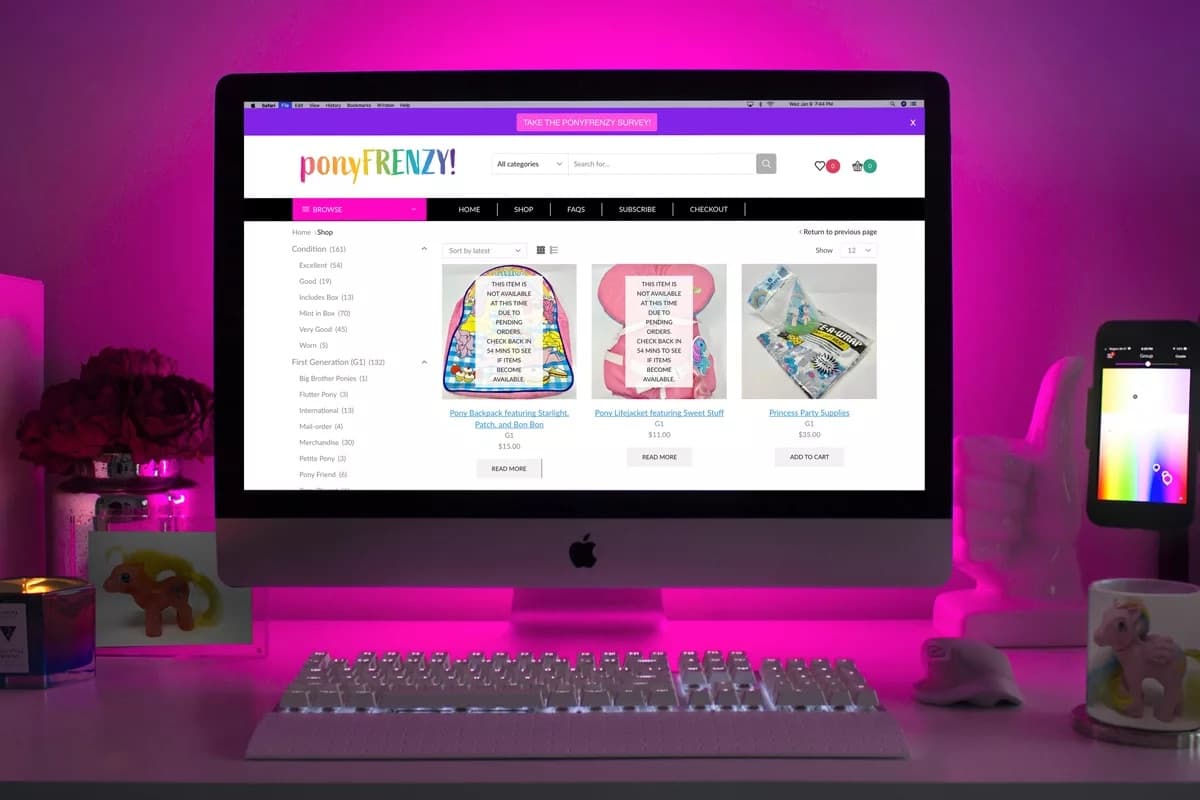
The sharpest proof of the model was a marketplace we operated ourselves: PonyFrenzy, a niche collectible storefront created to sell through an entire collection of pony toys. That is a constrained, honest product problem: finite inventory, passionate collectors, and no room to hide behind “we’ll add more SKUs.”
Constraint
As a founder I owned pricing, service design, customer relationships, and delivery quality at the same time. The studio had to scale past me without becoming a feature factory. The marketplace had to create urgency without feeling extractive.
Decision
- Studio operating system. Hired and mentored a cross-functional team of 20+ in product, engineering, design, and marketing. Established practices for discovery before engineering investment.
- Marketplace as a full loop. Owned acquisition, discovery, merchandising, checkout, payments, fulfillment, and retention—not just the storefront theme.
- Frenzy mechanics. Sales launched on scheduled “frenzy” days: first-come, first-served rather than auctions, so collectors could transact without watching a clock for days.
- Brand as trust. Organic marketing and a friendly voice created a following that would show up when inventory dropped.
Outcome
- Studio served startups, marketplaces, ecommerce brands, and enterprise clients over more than a decade.
- The collectible marketplace achieved complete inventory sell-through (100% GMV).
- Repeat purchase and retention improved as friction dropped across discovery, pricing, and the buyer journey.
- The founder experience is still the backbone of how I lead: clarity, craft, and accountability for the whole system.
What I would do again
Operate at least one product end-to-end. Advising is not the same as owning inventory, payments, and a disappointed collector at 9:01 a.m.
What I would change
I would have productized Funnychord’s discovery methods earlier—turning “how we decide what to build” into a shareable spec, the same way I now run AI-native delivery.